Neurology
Specializing in Parkinson's Disease, Movement Disorders, and all aspects of Neurological Disorders.
Neurology

The Empathic Brain
Why do we watch sad movies? Superficially, if you looked out at the audience of a tear-jerking film, people wouldn’t look like they're having a particularly good time—you would see a large room full of people crying. An alien from another planet might suppose the audience was being submitted to some kind of punishment. But we pay good money to see these films, and we give honors and awards to those who can best make us feel miserable.
We are naturally very social creatures, and it benefits us to show that we understand what another person is going through. When we see someone feeling a strong emotion, we may feel that their emotions are somehow contagious. And the emotions that go through someone else’s brain are duplicated to some extent in our own.
Have you ever automatically grimaced as you watched someone injure themselves? If she hit her eye, would your hand reach up towards your own face? Why would you do that? After all, you were not the one who was directly impacted. How is it that you seem to feel another person’s pain?
As humans, most of us truly need each other. This is not some kind of superficial, heartwarming platitude: it is a biological fact. In a famous study, baby monkeys were raised with all the food they could need, but without any kind of social contact, and these monkeys did not live as well as those who had some kind of connection. We have evolved to benefit from group interactions, and have a strong physical drive to be with other people.
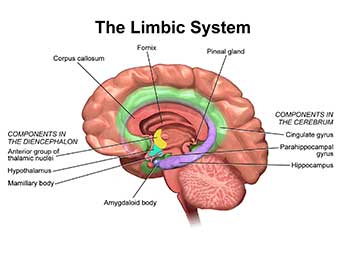
Even if it means feeling pain that is not our own, we will enjoy the experience of commiserating with others. The rewards of being part of a community seem to easily outweigh the price of tears. When we watch someone go through an experience, we “mirror” what they are feeling and doing. Even if our face remains still, areas of our brain that would activate if we ourselves were undergoing someone else’s experience are still energized. Different regions of the brain have been identified as particularly important in empathy, such as the anterior insula and the anterior cingulate cortex.
But there’s more to it than that. Higher orders of cortex become involved when we intentionally take another person’s perspective and try to understand why someone is behaving in a certain way. This can help us regulate our emotions and come up with an empathic response. For example, we may not initially react well when we hear someone has stolen from another, until we learn that they are impoverished and had to steal to feed their starving child.
An interesting study demonstrated how our background can modulate empathy by showing videos of someone undergoing a medical procedure to two groups of people in a functional MRI study. The first group were average, everyday people, and the second group were physicians. Whereas in the first group, areas in the brain associated with pain and empathy were activated by watching the procedure, in the physicians' brains, areas involving decision making and attention were activated, with no signal from the pain regions. The researchers theorized that the training of physicians had allowed them to control their emotions so that they could be of technical assistance, but perhaps at the cost of dampened sensitivity to the pain reactions of their patients.