Stroke Treatment
The stroke treatment that is chosen by your doctors varies depending on the type of stroke you or someone you know suffered, and its cause.
Treatments
Stroke Treatment
The stroke treatment that is chosen by your doctors varies depending on the type of stroke you or someone you know suffered, and its cause. Knowing about the options can help you be a more active participant in your own, or your loved one's care.
Stroke Hospitals
Advances in stroke care have brought to life the concept of the Stroke Center, a group of people from different areas of a hospital who work together to diagnose, manage, and rehabilitate stroke patients. This group of articles describes what resources hospitals are required to have before they can become stroke centers, and why these superb facilities provide superior care for their patients, and their communities.
Primary Stroke Centers Provide Superior Care for Stroke Patients
Advances in the treatment of stroke led to the advent of the "primary stroke center," or a hospital where a group of medical professionals who specialize in stroke, work together to diagnose, treat, and provide early rehabilitation to stroke patients. The concept was born after experts in the field realized that less than 5% of people with an acute stroke received t-PA, a medication that when given within three hours of the beginning of stroke symptoms can help dissolve stroke-causing blood clots. However, if given later, it can lead to serious bleeding in the brain.
Many barriers prevent patients from receiving this treatment, but a common one is a delayed diagnosis inside a busy emergency room. To address this, the Brain Attack Coalition (BAC) issued comprehensive guidelines for the diagnosis and treatment of acute strokes.
The following are the major recommendations by the BAC that hospitals must address in order to obtain primary stroke center status with the Joint Commission.
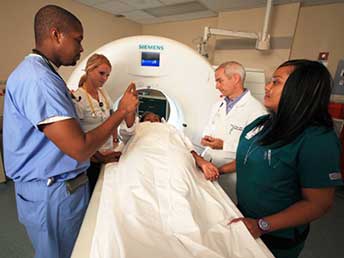
- A CT scan or MRI scanner must be available 24 hours each day, and should be reserved for stroke patients within 25 minutes of being ordered
- Access to neurosurgical services (access to a brain surgeon)
- Laboratory tests of patients with acute stroke must be completed within 45 minutes of being ordered
- A physician with expertise in interpreting CT or MRI studies must be available within 20 minutes of being asked to read a study
- A written t-PA protocol must exist in the emergency department
- The medical organization must have a declared and established commitment for acute stroke care
- The hospital must have written acute stroke "clinical pathways" or "care maps"
- An acute stroke team, including a physician and at least one other healthcare professional, must be available around the clock
Medical Treatments
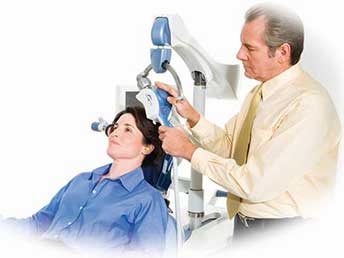
The majority of strokes are treated with medications. In addition to weighing the above factors, doctors also consider how long before treatment the stroke occurred when selecting a drug for a patient.
The basics of stroke treatments
The most effective stroke treatments can only be given within the first few hours after a stroke has occurred. Once you are identified by ambulance or emergency personnel as someone who could be having a stroke, doctors will first need to know when your symptoms started. They will also need to make sure that your symptoms are not the result of bleeding inside your brain, as medical treatments for stroke can worsen bleeding. This information will help them determine what type of stroke you are having and what type of treatment you will need.
There are two main types of stroke treatment:
- Treatment of ischemic stroke
- Treatment of hemorrhagic stroke
Surgical Treatments
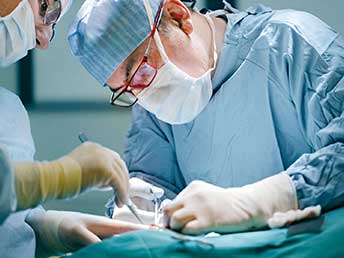
Some strokes can only be treated surgically. While drugs carry their own risks, performing a surgery to treat a stroke brings a whole other set of concerns to the table. Still, these procedures can be life-saving.
Severe Brain Injury, Stroke, and Hemicraniectomy
Most strokes are small and cause insignificant brain swelling. A few of them, however, cause such a large degree of swelling that with medical management alone they are almost certain to cause death. For example, when a large stroke affects the blood flow through the main middle cerebral artery, almost an entire side of the brain is completely deprived of blood, causing the rapid death and swelling of nearly half of the brain.
Because the brain is encased by the walls of the bony skull, this swelling leads to an increase in intracranial pressure (ICP), and results in an enlarged area of brain damage. In the long run, the increased ICP prevents blood from flowing into most of the brain, resulting in a rapid progression to brain death. In the majority of cases, the best way to relieve the deadly ICP is through a life-saving surgery called a hemicraniectomy.
What is a hemicraniectomy?
A hemicraniectomy is one of the most effective ways of relieving massive brain swelling. This surgical procedure, which is performed in the operating room under anesthesia, consists of temporarily removing a portion of the skull (sometimes up to one half or more) in order to allow the swollen brain to expand beyond the confines of the skull bone, without causing further elevations in brain pressure. The part of the skull bone that is removed is typically frozen until the swelling has resolved, at which point it can be sutured back onto its original place.
Should every large stroke be treated with a hemicranieactomy?
No. Although many physicians advocate for hemicraniectomy in cases of severe brain swelling, others feel that in spite of the proven benefits of this procedure in terms of survival, hemicraniectomy does not guarantee a meaningful restoration of quality of life for patients This is especially true for large strokes, for people who are medically frail, and for people of advanced age. Thus, a great deal of controversy surrounds the impact that this procedure has on the lives patients and their families.
- Lumbar Puncture: Common Questions Answered
- What is a Lumbar Puncture?
- Taking a Spinal Tap
- Hyponatremia in Neurology
- Laboratory Tests in Neurology
